F1
Skill, strategy, speed, smarts: Everything that goes into an F1 overtake
Passing a competitor – or preventing one – is at the core of every Formula 1 race. But what are the keys to mastering both attack and defence?
Formula 1 is nobody’s idea of a simple game, but there’s one basic law of the jungle that doesn’t take much understanding every time the lights go out.
It’s either pass, or be passed.
Overtaking or defending from being overtaken – through skill, strategy, smart thinking, staying on your toes and sheer determination – is a big reason why we all watch, with the fan bases of some drivers based as much on their brilliance in battle, decisiveness in the fight or stubbornness in defence as much as nationalistic pride or team loyalty.
What goes into an overtake? What physical tools are at a driver’s disposal to enhance their talent? How much of what happens on track is determined by decisions off it?
All valid questions … so sit back in the slipstream while we make you a pass master.
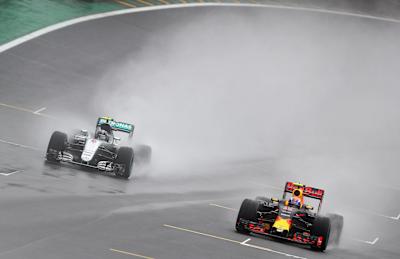
Max Verstappen overtakes Nico Rosberg at the 2016 Brazil Grand Prix
© Getty
On-track: the driver decides
Tennis, football, basketball … the playing arenas for each of these sports and countless others can have their slight variances while being mostly the same, but that’s not the case in Formula 1.
Night races, street races, old-school tracks of a bygone era, slick new tracks with that ‘new car smell’, venues where it rains, others where it never does, temperatures from barely double-digits to the high 30s … no two Grand Prix venues are remotely the same, and there’s currently 24 of them on the annual calendar.
Why does that matter? The modern-day F1 driver needs a versatile skill set where their strengths are heightened, but their weaknesses either imperceptible or have tiny cracks that can be papered over. Every little advantage is lap time or track position to be exploited.
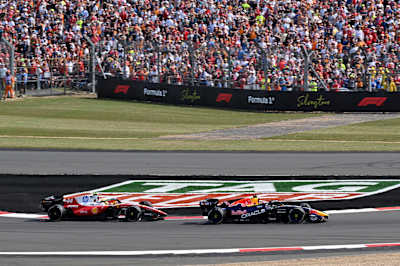
Max Verstappen overtakes Lewis Hamilton at Silverstone
© Getty
It’s the same when it comes to overtaking.
Plenty of what goes into an overtake begins well away from the public eye.
From pole, the second row, the middle of the pack or right at the back, there’s always something to learn. Aim for the inside of the first corner where the track layout can invite clashes and accidents on the outside? Avoid one side of a track that may be shaded by a grandstand where the track temperature is cooler and offers less grip? What’s the ideal line on a wet track versus a dry one?
Knowing your competitors – is critical, too. Some drivers earn a reputation for being tough to pass because of their willingness to drive to the limit.
Then there’s the conditions and characteristics of the circuits themselves.
How wide is the track? Does the layout offer multiple racing lines that encourage overtaking attempts, or do you have to make the most of the few corners where passing on track – other than if you have a significant car advantage – has a lesser chance of success? How significant is the problem of ‘dirty air’ – the disturbed airflow from the car ahead that compromises the aerodynamic potential of your own car and can lead to more sliding and wears out your tyres faster – at one track compared to another?
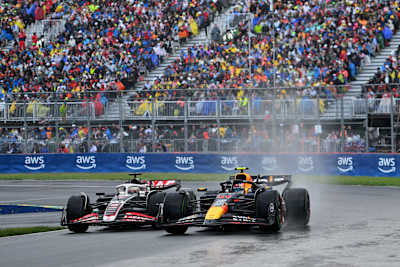
Sergio Perez leads Kevin Magnussen at the 2024 Canada Grand Prix
© Getty
A big change for 2026 – and terminology that you’ll hear on F1 broadcasts – is the implementation of Overtake Mode in the brand-new power unit regulations, which aids in overtaking or defending against one.
Broadly, Overtake Mode can be used when a driver is within one second of a car ahead in designated overtake zones of each circuit, and utilises extra power via a button activated by the driver to help encourage a pass.
Unlike its overtaking-aid predecessor, the Drag Reduction System (DRS) that could only be used at specific parts of each track, Overtake Mode can be used at a driver’s discretion anywhere on the lap, the extra half a megajoule of electrical power from the car’s battery per lap able to be used in one hit, or drip-fed through a single lap before it recharges.
Finally, there’s also rules that cover the dos and don’ts of overtaking etiquette in F1’s ‘Driving Standards Guidelines’, a snapshot of acceptable conduct in racing situations and where the lines are in terms of overtaking on the inside or outside of a rival, and what could draw the ire of the race stewards and lead to sanctions that range from having to relinquish a position gained on track to time penalties, grid position drops for subsequent races and – at its most extreme – being temporarily banned from competing.
Off-track: the strategy chess match
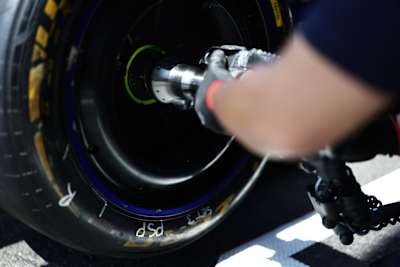
When it comes to passing a rival or preventing one, tyres – the one aspect of a car’s performance the teams have to react to, given all 11 teams are provided the same rubber from Pirelli, F1’s tyre supplier – are critical.
As the car’s sole contact patch to the track, they’re F1’s primary performance differentiator, yet the only aspect of the car the teams have no say in or ability to produce based on the particular strengths and weaknesses of the machinery they’ve created and refined.
Everything that goes into an F1 overtake
© Getty
It stands to reason that a new tyre will offer better grip, elicit higher performance peaks and enhance overtaking chances, but that has to be balanced by the driver managing that performance; each tyre has a finite window of peak grip, which has to be drip-fed through a particular stint in a race compared to qualifying, where all that extra grip can be exploited over a single lap to achieve the best possible grid position.
Tyre management plays a crucial role in race strategy, given that each driver must use at least two different compounds of tyres (Soft, Medium or Hard) in a Grand Prix.
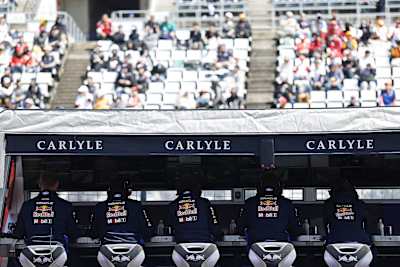
As we explained here in our pit stop primer, the terms ‘undercut’ and ‘overcut’ are used perhaps more than any other in the F1 vernacular, and are particularly pertinent to passing, particularly at tracks where the potential to overtake on track is limited or arguably non-existent, like Monaco.
Do you pit earlier than your rivals (an undercut) to have new tyres fitted in an attempt to use that extra performance to pass them when they make their own stop? Or do you employ the opposite (overcut) strategy and run longer than those you’re battling with to pit later and attempt to retain track position? Races have been won or lost by overtakes that are essentially completed in the pits and with the help of an army of personnel at the track or back at a team’s HQ.
Add weather conditions, the historic likelihood of a safety car intervention at some tracks relative to others, and being able to ‘read’ a race to react to what your rivals are trying to achieve is all part of a thick strategic brew of overtaking options that a driver is part of deciding, but has to be the one to execute against a continually moving target.
Everything that goes into an F1 overtake
© Getty
Nailing that time and time again is part of what separates the great F1 drivers from those who are merely very good.
While Max Verstappen’s stellar career is underpinned by one of the current grid’s best pole-to-victory conversion percentages, the Oracle Red Bull Racing driver also won from more different grid positions (10) than anyone in F1 history, his scintillating Brazil 2024 win coming from 17th to set a benchmark once thought impossible, and one achieved by pass after pass after pass.
The perfect overtaking masterclass (probably) doesn’t exist, but Max’s 62nd F1 victory was pretty damned close…

Max wins the 2024 Brazil Grand Prix
© Getty

Max wins the 2024 Brazil Grand Prix
© Getty

Max wins the 2024 Brazil Grand Prix
© Getty

Max wins the 2024 Brazil Grand Prix
© Getty